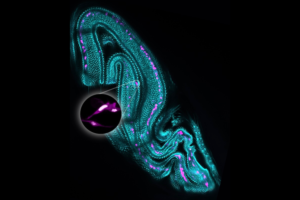
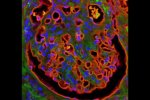
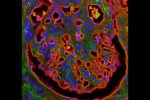
Tua Karling won the 2026 Genetics Society of America Drosophila Image Award
Dr Tua Karling, a previous PhD student in Dr Helen Weaver’s group, has won this year's Drosophila Image Award, a prestigious international image competition.
A new gene therapy approach aimed at protecting people with type 1 diabetes from developing diabetic kidney disease — a serious and common complication of the condition, has shown promising results in a University of Bristol study.
Researchers studying how hypertension increases the risk of heart attacks and strokes have discovered a remarkable way in which the body adapts to hypertension by developing a set of “new senses”.
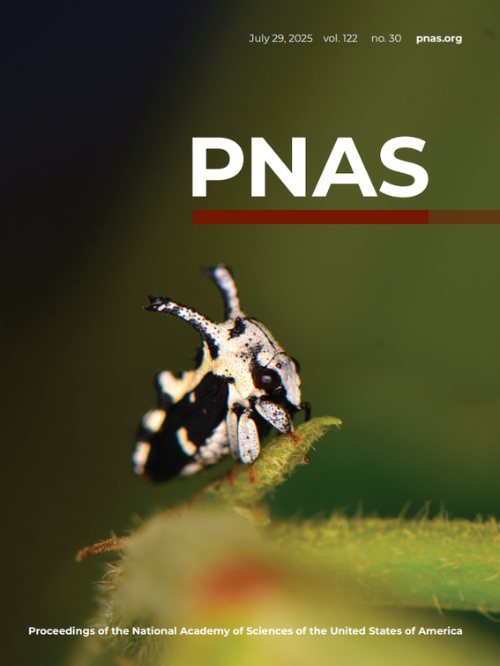
Could detecting static electricity be a factor in explaining why treehopper insects have evolved such bizarre body shapes?
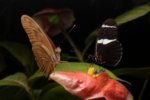
Butterflies that independently evolved the same wing patterns have also evolved similar eyes and brains which are fine-tuned for vision in the shifting light of tropical rainforests, according to new research led by the University of Bristol published in PNAS this week.
The renowned academic scientific journal PNAS has named a University of Bristol research paper providing insight into a fascinating method used by caterpillars to detect predators as one of the best it published in 2024.
Older women could be vulnerable to harmful inflammation from new gene therapies to treat incurable eye diseases, new research has found. The University of Bristol-led study, published in Molecular Therapy, reveal how age and gender affects inflammation caused by gene therapy treatments and could cause damage to the eye. The findings could help improve the therapy’s effectiveness for eye conditions and highlights the need for personalised treatment to reduce risk and ensure a better outcome for all patients.
Dr Helen Weavers, Associate Professor in Cell and Developmental Biology in the Faculty of Health and Life Sciences, has been awarded the Women in Cell Biology (WCIB) Early Career Medal 2025 by the British Society for Cell Biology (BSCB).
A species of tropical butterfly with unusually expanded brain structures display a fascinating mosaic pattern of neural expansion linked to a cognitive innovation.
A key molecular step required for the division of damaged mitochondria - essential for cell health - has been identified by a University of Bristol-led study. The finding has the potential to establish how mitochondrial dysfunction goes wrong in common neurodegenerative diseases, such as Parkinson's and Alzheimer's.
Increasing the levels of a key protein in the cells at the back of the eye could help protect against the leading cause of vision loss among older adults, finds a new discovery made by researchers from the UK, US, Germany and Australia. The University of Bristol-led findings are published today [5 June] in Science Translational Medicine and featured on the front cover.
Researchers at the University of Bristol have uncovered a mechanism by which a hormone can protect the blood vessels in the kidneys from the damage caused by diabetes. In doing so, the team has identified a potential early treatment strategy to prevent or slow progression of kidney disease in people with diabetes. The study, part-funded by Kidney Research UK, is published in Diabetes.
David Stephens, Emeritus Professor of Cell Biology in the School of Biochemistry, has been awarded the Royal Microscopical Society (RMS) Scientific Achievement Award for his work on cell biology.
Tiny external structures in the wax coating of blueberries give them their blue colour, researchers at the University of Bristol can reveal.
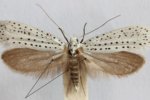
The workings of the ultrasonic warning sounds produced by the wings of a species of moth have been revealed by researchers at the University of Bristol.
New research has shown a new type of inhibitor drug could prevent microvascular diabetic complications, such as diabetic eye and kidney disease. The University of Bristol-led research is published in Cardiovascular Diabetology.
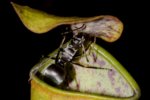
A scientific study of pitcher plants species that use the same complex ‘springboard’ mechanism for insect capture has revealed an explanation for how complex traits requiring multiple components may evolve.
New research has demonstrated the potential for the ADDomer ™ platform to produce thermostable vaccines and reagents to tackle viral infections The study led by the University of Bristol and Imophoron, a biopharmaceutical company developing thermostable nanoparticle vaccines using its ADDomer platform, is published in Antibody Therapeutics today [29 November].
A potential treatment for the world’s leading cause of kidney failure in children needing dialysis has been discovered by an international team of scientists. The University of Bristol-led breakthrough is published today [19 October] in Med.
Researchers at the University of Bristol have made a remarkable step forward in finding a potential cure for a type of childhood kidney disease.
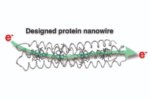
Researchers have created a unique microscopic toolkit of ‘green’ tuneable electrical components, paving the way for a new generation of bioelectronic devices and sensors.
Heliconius butterflies’ brains grew as they adopted a novel foraging behaviour, scientists at the University of Bristol have found.
A molecular machine, which plays an essential ‘cargo’ role in controlling the delivery of proteins to the surface of human cells, and is implicated in several diseases, has been identified in a landmark study using artificial intelligence (AI). The research, led by an international team of scientists, is published today [11 May] in Cell.
A new way to reduce progression of diabetic kidney disease, affecting 40% of people with diabetes, has been discovered by scientists. The University of Bristol-led study published today [7 February] in JCI Insight, could help the 4.8 million people in the UK with diabetes who are four times more likely to need either dialysis or a kidney transplant.
An anti-aging gene discovered in a population of centenarians has been shown to rewind the heart's biological age by 10 years. The breakthrough, published in Cardiovascular Research and led by scientists at the University of Bristol and the MultiMedica Group in Italy, offers a potential target for patients with heart failure.
A team of scientists, led by the University of Bristol, has developed a new photosynthetic protein system enabling an enhanced and more sustainable approach to solar-powered technological devices.
Inspired by the processes of cellular differentiation observed in developmental biology, an interdisciplinary team of researchers at the University of Bristol have demonstrated a new spontaneous approach to building communities of cell-like entities (protocells) using chemical gradients.